Mount Seir and the Hard Shell We Refuse to Crack
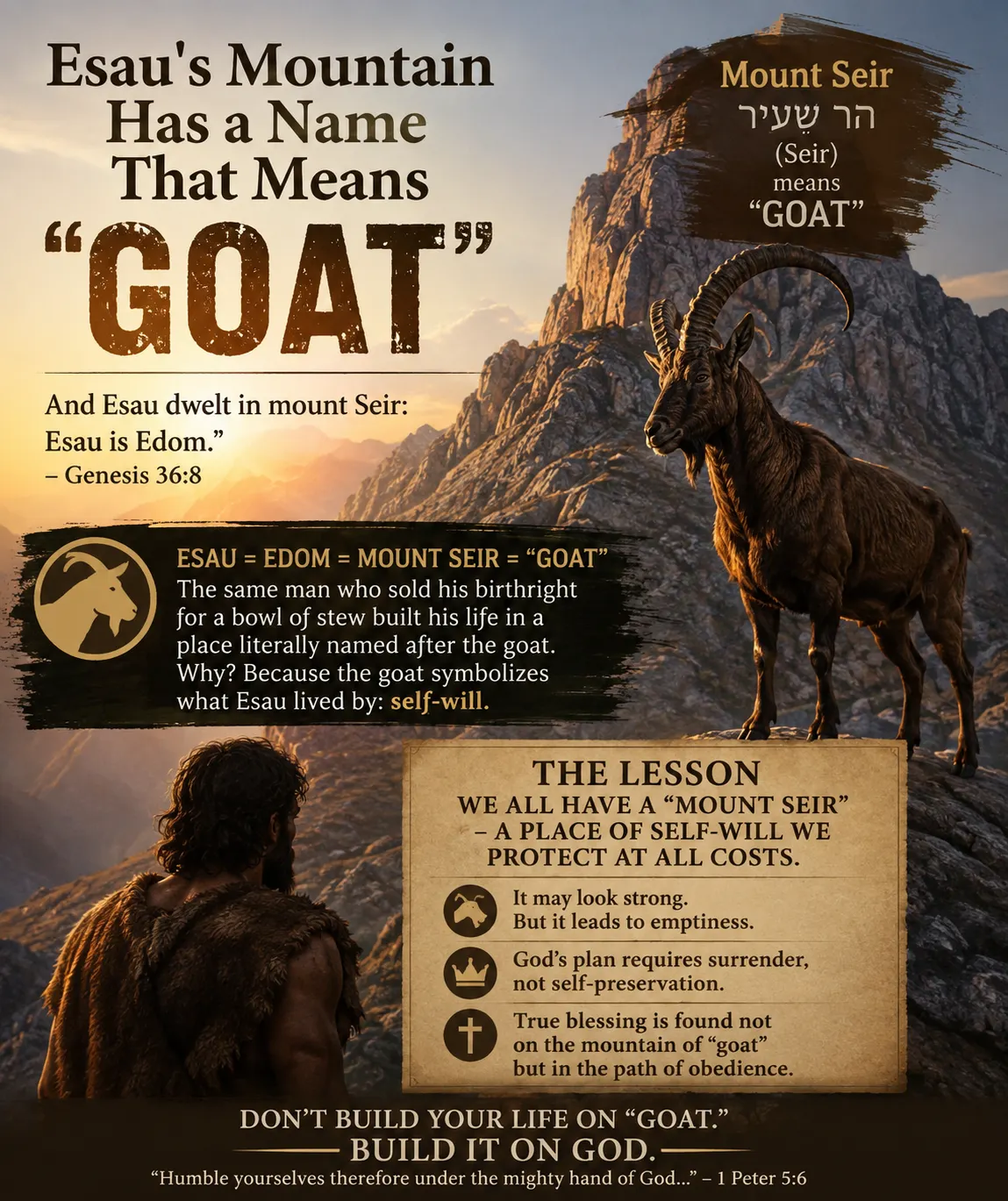
Esau's Mountain Has a Name That Means "Goat" — And a Lesson About the Self-Will We Protect at All Costs
There's a kind of person who never breaks. Not because life hasn't tried. Because they've built a shell so hard that nothing gets through — not correction, not love, not even years of gentle pleading. They've simply decided: this is who I am, and nobody is going to change that.
Scripture has a place named after exactly that spirit. It's called Mount Seir.
The Meaning Behind the Mountain
Mount Seir was the homeland of Esau and his descendants, the Edomites. The name "Seir" is connected to the Hebrew word for a goat — a sa'ir. It's worth noticing that the same word family appears in places tied to false, demonic sacrifice. Leviticus 17:7 warns Israel not to sacrifice anymore "unto devils," and the underlying word there is connected to this same root — goat-demons, or false spirits worshipped in the wilderness.
That's a heavy piece of etymology to sit next to a mountain range. But the picture this teacher draws is intentional: Seir represents a hardened exterior — a "shell," like the tough outer covering of a fruit or a seed — wrapped around a will that has decided never to yield. It's the picture of Esau himself: strong, capable, unwilling to be shaped, trading his birthright for a meal and never looking back with regret.
The Shell We All Recognize
You don't have to look far to recognize this pattern. It's the person — maybe even the version of ourselves on our worst days — who has said, in effect, "I am the way I am. Don't touch that part of me." It shows up in small, familiar phrases: That's just who I am. Nobody tells me what to do. I've always done it this way, and I'm not changing now.
None of these statements sound evil. They sound like confidence. But underneath, they can be a hardened shell keeping out the very correction that would set us free. The tragedy of a shell like this is that it doesn't just resist bad things — it resists good things too. It resists the Holy Spirit's gentle conviction as fiercely as it resists sin's exposure, because its real commitment isn't to right or wrong. It's to never being cracked open.
What Breaks a Shell Like This
The good news buried in this hard picture is that shells are not permanent. Esau's story is tragic partly because he never let his hardened will meet grace on grace's terms. But we are not required to repeat his ending. The same God who let Jacob wrestle all night until his own self-reliant strength gave way is the God who can meet us at our hardest, most defended point — if we stop treating that hardness as an identity to protect and start treating it as a shell to lay down.
Softening doesn't mean losing yourself. It means finally letting the outer shell crack so that something true and Christ-shaped can grow underneath.
Reflection
Is there a part of your life you've quietly declared off-limits to correction — a habit, an attitude, or a relationship pattern you defend with "that's just who I am"? What would it look like to let that shell crack this week?
Prayer
Lord, I confess the places in me that have hardened into a shell — the parts of my will I've protected instead of surrendering. Break through what I've built to keep You and others out. I don't want to be known for my defenses; I want to be known by Your Spirit at work in me. Amen.
Key Verse
"They shall no more offer their sacrifices unto devils, after whom they have gone a whoring." — Leviticus 17:7
Key Takeaways
● Mount Seir's name is tied to the Hebrew word for "goat," linked elsewhere to false worship.
● Esau and Edom represent a hardened, self-determined will that resists correction.
● Phrases like "that's just who I am" can be signs of a protective shell, not confidence.
● A hardened will resists good influences as fiercely as bad ones.
● God is able to meet and soften even the most defended parts of our character.