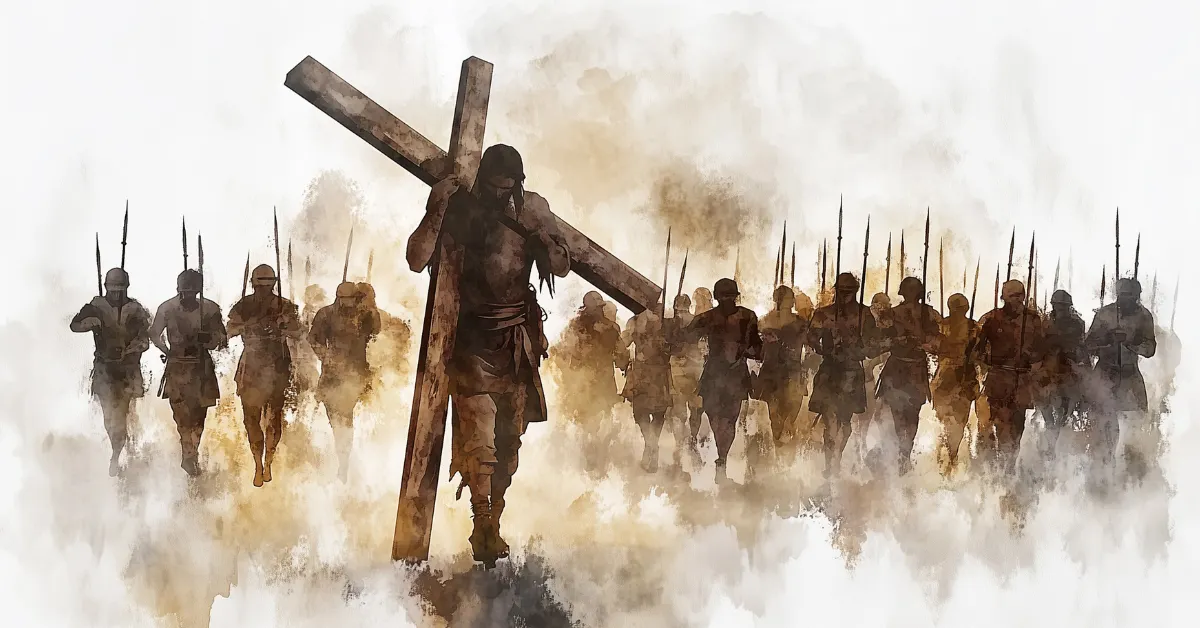
Q. Why did Jesus have to die at 33 ?
Q. Why did Jesus have to die at 33 ? If he lived and showed his powers until 60, he could have converted more people right ? Why didn't he live long like Moses ?
A. This is a profound question that has been explored by theologians and historians for centuries. From a human perspective, a longer life for Jesus seems like it would have been more "efficient" for spreading his message. However, within Christian theology, the timing and duration of his life are seen as intentional and significant.
Here are the primary theological reasons why Jesus’ life was centered on a relatively short window of time.
1. The "Fullness of Time" (Divine Timing)
In the Bible, the concept of Kairos (God’s opportune time) is often used to describe Jesus' arrival. Galatians 4:4 says he came in the "fullness of time." Theologians argue that he arrived at the exact moment when the world was prepared—through Roman roads, a common Greek language, and the Jewish expectation of a Messiah—to receive and then spread his message quickly after his death.
2. Sacrifice vs. Longevity
The primary mission of Jesus in Christian belief was not to be a long-lived political leader or a philosopher, but to be the "Lamb of God."
The Perfect Sacrifice: In ancient Jewish tradition, a sacrificial lamb was often a young animal in its prime. Jesus dying at around age 33 (in the "prime" of his life) symbolizes a perfect, unblemished sacrifice.
• "It is Finished": The goal of his life was the Atonement. Once he had fulfilled the prophecies and established the New Covenant, his physical work on Earth was considered "finished" (John 19:30). Remaining until age 60 wouldn't have added to the efficacy of the sacrifice itself.
3. The Shift from Physical to Spiritual
Jesus himself addressed the idea that his departure was actually better for his followers. In John 16:7, he says: "It is for your good that I am going away; unless I go away, the Advocate [the Holy Spirit] will not come to you."
• Limitations of Flesh: While Jesus was on Earth, he was physically limited to one place at one time.
• The Church's Mission: By dying, rising, and ascending, he "passed the baton" to his disciples. Through the Holy Spirit, his "powers" weren't just shown by one man in Judea, but by millions of believers across the globe. This allowed the message to convert more people than one person ever could in a 120-year lifespan.
4. Faith vs. Proof
If Jesus had stayed for 60 or 70 years, performing undeniable miracles every day, it might have crossed the line from faith to coercion.
• Christianity emphasizes a relationship based on faith and free will.
• Constant, overwhelming displays of power for decades might have forced people into a "belief of sight" rather than a "belief of the heart."
5. Jesus vs. Moses: Law vs. Grace
The comparison to Moses is interesting because their roles were fundamentally different:
• Moses was a "National Architect." He needed 120 years because he was building a nation from scratch, establishing laws, and leading a physical migration.
• Jesus was a "Redeemer." He didn't come to build a physical kingdom or an earthly government, so he didn't need the decades of administration that Moses required. His life was a "sprint" to the Cross to solve the problem of sin, rather than a "marathon" of nation-building.
Conclusion
Ultimately, the short duration of Jesus’ ministry (about three years) serves to highlight that the power of his message didn't rely on his physical presence, but on the significance of his death and resurrection.